San Juan Regional Medical Center, a 198-bed community hospital in Farmington, N.M., that serves the Four Corners region where Utah, Arizona, Colorado and New Mexico meet, strives to provide the members of its sprawling rural community with access to the surgical services they deserve.
But it faced a critical challenge. Its manual paper- and Excel-heavy OR tracking processes were creating bottlenecks, limiting patient access, and leaving operational blind spots. Improving OR utilization represented an opportunity to expand surgical access and better serve patients across the community.
The solution to its problem centered on installing new technology. But, as with any tech upgrade, its successful implementation went far beyond simply installing software.
We spoke with San Juan Regional Medical Center’s Chief Information Officer John Gaede, CPHIMS, MLS (ASCP), and Physician Informatics Executive Carlo Hallak, MD, about what it took to unlock significant efficiencies in its surgical scheduling and OR utilization. To hear the whole story, Mr. Gaede and Dr. Hallak will present on their work at the upcoming Transform Perioperative Operations Virtual Summit (June 9). Click here to register for the event.
Tell us about the challenge you faced.
Mr. Gaede: We are truly rural medicine. You have to drive about 180 miles to get to another large tertiary medical center. We operate 10 ORs with about 7,500 annual surgeries and just over 24,000 unique patients. Our hospital mission statement says it best: “Better is our mission – improving lives through personalized health and care.” To complement that, within information services, our internal mission statement is “We save lives and we innovate, in that order.” The patient and the caregiver are the center of everything we do.
We brought that mission and vision to the table when looking at our ORs and seeing what we could do alongside our colleagues and caregivers in that space to address efficiency, throughput, and capacity management. We were challenged in this area, so we worked to transform our operations.
Dr. Hallak: Our organization had done a lot of investigation and investment in bringing in external consultants to advise on how we could improve some industry standard KPIs and metrics for an OR space. They created reports and put the infrastructure in place in terms of processes and the people. We had the governance structure and the right committees in place to actually fix the problem.
But in our meetings, we were relying on month-end reports, which meant we were addressing problems 30 days after they happened, and it required a lot of maneuvering and redefining to get them from the core EHR we use. We had disconnected manual workflows and different ways of tracking these issues. Leadership had no real-time visibility into OR capacity, block utilization, turnover times, or first case on time starts. Our admissions nurses were calling floors trying to find clean rooms. Physicians were signing paper forms to schedule cases. IT had its data. Operations had its own data. We were not singing from the same sheet of music. It was fragmented, slow, and error prone.
We had the people and the process in place, and a good problem statement that we needed to solve, but we were lacking the technology that could help us tell the right story and help us do this.
Where did you find the technology you needed?
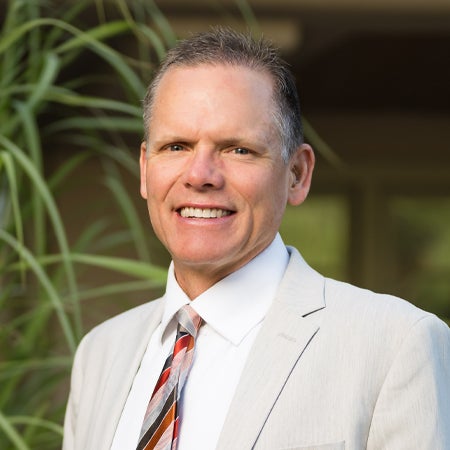
John Gaede, CPHIMS, MLS (ASCP), Chief Information Officer, San Juan Regional Medical Center
Mr. Gaede: We found that technology in LeanTaaS’ iQueue for Operating Rooms. What stood out to us was that it addressed the gap we had identified: giving our teams real-time visibility into OR capacity and helping us move away from fragmented, manual processes. For us, it wasn’t just about adding another system. It was about finding a tool that could help connect IT, clinical informatics, and perioperative operations around the same data, so we could make better decisions for our patients, surgeons, and caregivers.
How did you achieve that cohesion?
Dr. Hallak: First, we have an incredible partnership with LeanTaaS, whose customer success team was embedded on-site. They were very responsive, present all the time, and they listened to pain points. They met us where we were at.
Second, we focused on operational flexibility and physician champions. Dr. Jared Fuller, who is our medical director of anesthesiology and a data geek, had been working on all these Excel sheets, and was one of the few people who understood the data and how to actually communicate it. At the implementation of any new product, you always have physicians and others coming back and questioning the data. Because he established himself as a trusted source, Dr. Fuller helped us validate the data and communicate its validity.
Mr. Gaede: From an IT and governance perspective, executive sponsorship was critical from the start. We brought the project to the board and senior leadership team by grounding it in our broader goals: improving patient access, supporting our caregivers, and helping the organization make better use of OR capacity. Having that leadership alignment early helped create the accountability and momentum needed to move the work forward.
We also had an existing governance structure that brought together surgeons, quality leaders, and other key stakeholders. That gave us a strong foundation to build on. Once we had more timely, reliable data available, those teams could use it to have more productive conversations, provide feedback in real time, and make decisions that supported better access and more efficient OR operations.
What are some impacts you’ve seen from the implementation?
Mr. Gaede: The first was our 88% user adoption rate within the first 90 days. We had 71 schedulers, staff, and physicians actively using the system right out of the gate. Secondly, we had 498 approved requests for booked or open OR time slots. This was huge for our organization, as those cases might not have been scheduled or might have been delayed and impacted access to care under the old system. Thirdly, we have a 10-day average lead time for case requests. Patients are being scheduled proactively now, which means better prep and better outcomes for our patients and access for our community.
The big one is the two-time return on investment in the first quarter. But all of this is not just about dollars. It’s about patient access. It’s about unlocking capacity we didn’t even know we had. Beyond the financials, there are significant operational and clinical outcomes.
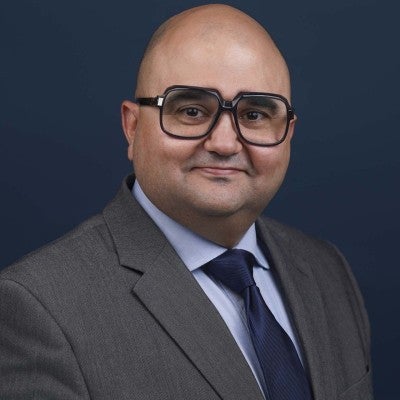
Carlo Hallak, MD, Physician Informatics Executive, San Juan Regional Medical Center
Dr. Hallak: The elegance of the iQueue platform is that it can support multiple aspects of care. It allows for real-time visibility of capacity, so the surgeons will be able to schedule the right case at the right moment for the right patient based on their severity of illness. It eliminates all the noise. At the operational level, our leadership has all the visibility it needs to make those decisions to hire more people, to move different rooms to different places, to open capacity in real-time. Are we maximizing our robot usage and not letting it sit because of lack of correct scheduling and optimizing the scheduling? Leadership now has visibility into that information.
All of these are great outcomes from an operational perspective. From a clinical perspective, we’re reducing patient wait time. We’re not delaying care. And it improves staff satisfaction because there is less manual work, less paperwork, less faxing, less phone calls. One of our OR nurses told me, “I used to spend half my morning on the phone trying to find open slots. Now I just look at iQueue.” That’s time back in her day.
Mr. Gaede and Dr. Hallak will share more details and results from their perioperative transformation story during their session at Transform Perioperative Operations Virtual Summit on June 9. We encourage you to register for the event free of charge and join their session, “Unlocking Surgical Access: How a CIO-Physician Informatics Executive Partnership Bridged IT and Clinical Ops for 2X ROI in 90 Days.” Register for Transform Perioperative Operations Virtual Summit today!