What happens when a veteran perioperative leader walks away from the 24/7 responsibility of hospital operations, but not from the work she loves?
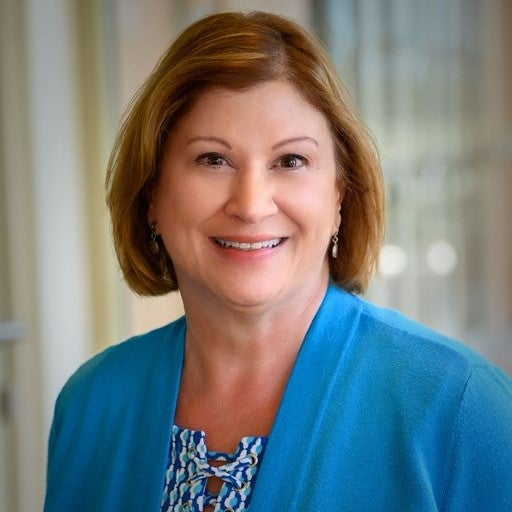
Stephanie Davis, MSHA, RN, CNOR, CSSM
For Stephanie Davis, MSHA, RN, CNOR, CSSM, former vice president of surgical services at HCA Healthcare, it meant reshaping her role from full-time healthcare executive to expert advisor. After decades spent leading surgical services at major health systems, Davis took her deep operational experience and transitioned into consulting, creating a flexible second act that still centers around impact, innovation, and mentorship.
Nurses considering entrepreneurship—especially those later in their careers—often wonder if it is too late to reinvent themselves. Davis proves it is not only possible, it can be deeply fulfilling. Her journey offers an inside look at what it takes to succeed in consulting, from establishing your credibility to letting go of long-held assumptions.
Davis currently serves as vice president of the Board of Trustees for the AORN Foundation and is the Leadership Track Chair for the OR Manager Conference, being held this October at Anaheim, California. Using the same strategic foresight and collaborative energy that defined her leadership career, Davis also now advises large healthcare organizations on perioperative operations.
In this Q&A, Davis shares what inspired her to take the leap, how she built the business acumen to succeed, and why being bold, curious, and willing to pivot are essential traits for nurse entrepreneurs.
I realized that my work as a nurse leader doesn’t end with retirement. I felt like I had more to give. I’ve always enjoyed teaching and guiding others to success. After years in executive roles, I still wanted to have a major impact on the profession—but on my terms. I’ve always strived to be ahead of the curve, and I saw how others were thriving in perioperative consulting. That intrigued me. I wanted to know if I could do the same, especially in a corporate headquarters environment, but with the flexibility to define my own schedule and focus.
Listening—really listening—is critical. When an organization brings you in, you need to understand what they’re truly looking for. Do they want a change agent? A roadmap to success? Help developing KPIs or dashboards? Maybe it’s about innovation or boosting efficiency and growth.
You also have to know how to communicate with executives. That means building business cases, pitching a vision, and backing it up with data. I also leaned heavily on my ability to establish advisory committees. Bringing in the most talented perioperative leaders to vet ideas has been extremely helpful. But no matter how good your plan is, you need to be ready to pivot. Flexibility is everything in consulting.
I had to remind myself: ‘You’re not in charge anymore. You’re advising.’ As a consultant, you don’t have direct reports or a large team. You’re it. You’re also no longer doing crisis management or checking emails around the clock. That’s liberating, but it also means the work is 100% on you. The resources at your disposal may be less—or more—than what you were used to. I learned quickly that adaptability and self-motivation are key.
Opening and running ambulatory surgery centers (ASCs) gave me a solid foundation in both the clinical and business sides of perioperative care. It taught me how to lead teams, manage operations, drive efficiency, and build strong relationships. That experience really helped me develop the business acumen I needed to succeed as a consultant, and it gave me the confidence to take a chance and step into entrepreneurship.
Beyond that, I recommend attending business-focused conferences and having conversations with people you admire. Networking is invaluable. The connections you make at these in-person events are vital when you’re building something on your own. Every relationship matters—fellow nurses, surgeons, anesthesia providers, administrators, and vendors.
I designed this chapter of my career to allow me to blend retirement with meaningful work. I usually work 2 or 3 days a week and only travel occasionally. I see success when my recommendations start to take hold, and when I see people get energized. The organization starts building and growing based on the framework we developed together. That’s when I know I’ve added real value.
This kind of work is complex. It’s one thing to have a great plan, but it’s another to execute on it. Every organization is different, with its own culture, infrastructure, and appetite for change, so you have to adapt your approach. In most cases, I’d say a 1- to 3-year timeline is realistic for seeing meaningful, measurable improvements to take hold. Consulting is definitely a long game, and success builds gradually as your guidance starts to resonate and energize the team.
Start by identifying what you’re passionate about. For me, it’s marrying clinical knowledge with operational strategy. Once I knew that, one of the first things I did was hire a professional to help me update my résumé and LinkedIn. I hadn’t looked for a job in over two decades because I’d grown my entire career within one health system. So, making sure I had a polished presence was essential. You have to be ready to show your value in a new light when stepping into entrepreneurship.
I’d tell myself to try not to get too attached. Consulting engagements are often shorter in duration and focused on specific outcomes. You’re contract labor, at the end of the day. It’s not meant to be permanent. You have to be ready to move on. That’s not always easy, especially when you’ve built strong relationships, but it’s part of the job.
I’m looking forward to more consulting opportunities, especially with large integrated delivery networks. I also love mentoring, teaching, and public speaking. I’m just finishing up a 12-month contract with a fantastic organization, and I could definitely see myself circling back in the future. Giving back is important to me. Serving on nonprofit boards, especially those with a medical mission or focused on supporting nurses, really speaks to me.
Don’t be afraid to try. Know your value. Ask for what you want because if you don’t ask, you won’t get it. Talk to people already doing the kind of work you want to do and get their advice. Pulse-check with your clients often to make sure you’re meeting expectations. Always work ahead of your deadlines. That’s how you build a reputation for reliability. And when things go well—celebrate that. You’ve earned it.
—Tarsilla Moura is content director of OR Manager.


