Mandatory implementation of the Consumer Assessment of Healthcare Providers and Systems Outpatient and Ambulatory Surgery Survey (OAS CAHPS) originally scheduled for 2018 has been delayed, but that does not mean it should be ignored, say ambulatory surgery center (ASC) leaders.
The earliest projected date when the survey could become mandatory is fall 2020, after the Centers for Medicare & Medicaid Services’ (CMS) annual rulemaking cycle in 2019. But many details are involved in implementing OAS CAHPS. It requires planning and practice before lessons can be learned from patients’ responses regarding their surgical experiences.
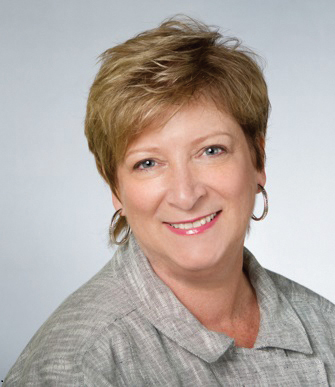
Michelle George, MSN, RN, CASC
“Implementation is not like flipping a switch; it is not a simple system,” says Michelle George, MSN, RN, CASC, vice president of professional development, Surgical Care Affiliates, Deerfield, Illinois, which manages approximately 220 ASCs. ASC leaders should start getting up to speed now (https://www.cms.gov/Research-Statistics-Data-and-Systems/Research/CAHPS/OAS-CAHPS.html).
Voluntary participation in OAS CAHPS began in January 2016. Early adopters are not required to publicly report their results, but implementing the survey early allows ASCs to improve areas of weakness before public reporting of results is mandated through OAS CAHPS. Indeed, OAS CAHPS scores prompted one facility to revamp its discharge instructions and, in the process, increase patient satisfaction (sidebar below).

OAS CAHPS is designed to measure patients’ experiences in Medicare-certified hospital outpatient departments (HOPDs) and ASCs, notably:
• communication and care provided by healthcare providers and staff
• preparation for the surgery or procedure
• preparations for discharge and recovery.
Patients also provide an overall rating of the facility and their willingness to recommend it to family or friends.
Although OAS CAHPS has 37 required questions, individual ASCs may add up to 15 additional questions. However, too many questions will deter people from answering, according to George.
“Around 60% of our centers implemented the survey during the early adoption period, and we have seen a few drop out since OAS CAHPS mandatory reporting has been delayed,” she notes.
Patients tend to stop answering questions after about the fifteenth question, says Ann Shimek, MSN, BSN, RN, CASC, senior vice president of clinical operations for United Surgical Partners International, Addison, Texas.
United Surgical Partners owns and manages 250 freestanding ASCs. Of those, she says, 85% have been early adopters of OAS CAHPS.
Shimek thinks expecting patients to answer 37 questions or more may be unrealistic. Indeed, concern about the survey being too long is one of the reasons mandatory implementation was delayed (sidebar below).
Some ASCs already conduct their own surveys and may continue to do so. But the questions in those surveys are probably different from those in OAS CAHPS. For example, George says: “Our old survey asked how well we did something. OAS CAHPS asks patients how frequently you did something, which is a little bit different.”

Perhaps the most important step in implementing OAS CAHPS is finding the right vendor. Only CMS-certified vendors can be used to administer the survey. To date, only 22 survey vendors are certified for more than 6,000 ASCs in the country (https://oascahps.org/General-Information/Approved-Survey-Vendors).
The dearth of certified vendors is one reason to consider implementing the survey before it becomes mandatory. ASC leaders and CMS sources say it is important to talk to at least three vendors before signing any contracts. The prices for vendors and their services are not equivalent.
CMS does not approve what vendors charge or any additional services they may include beyond what is required, CMS sources say.
“Cost varies by vendor and the scope of work, as well as the number of surveys distributed,” George says. “We are having our vendor develop additional reports for our company, so that will increase the overall cost of survey implementation.” Costs are also likely to change once CMS revamps its requirements for the survey.
Shimek adds that implementation time varies, but in general takes 3 to 4 months.
Here are some recommended steps for choosing a vendor:
• Get cost estimates from three vendors.
• Ensure vendors have experience with ASCs.
• Inquire about vendor’s return rates and monthly sample size, which affects cost.
• Ascertain if the vendor has experience with the ASC’s patient-accounting system.
• Request a free quarter to see how the survey implementation works.
• Select a designated employee to work with the vendor.
• Ask the vendor to do a demonstration of the survey.
• Ask how many reports the vendor will issue to the ASC and when.

Ann Shimek, MSN, BSN, RN, CASC
Nine out of the 37 required OAS CAHPS questions are based on what happens before the patient even arrives at the ASC. Many of these experiences occur in the surgeon’s office, which is why it’s important to get physicians engaged, says Shimek.
Physicians tend to be driven by data, so once survey results are received, they can be shown to surgeons to help them understand the importance of OAS CAHPS.
 The preadmission phone call is an invaluable step ASCs can take between the surgeon’s office and the day of the procedure. This helps set patients’ expectations of the upcoming experience and notification of the survey. However, although patients can and should be informed about the survey, there are do’s and don’ts of how they should be informed, Shimek says. For example, coaching on how to answer questions is not allowed (sidebar at right).
Educating ASC staff, physicians, and board members about the survey is important for achieving good scores. Shimek recommends reviewing the survey questions with staff and discussing responses indicating high satisfaction as well as areas where improvements are needed.
“Traditional ASC survey results have been reported using a Net Promoter Score based on percentage of responses. The OAS CAHPS calculation process uses the percentile methodology, which is typically a lower number,” George explains.
“It is important for leaders to understand this because it can be confusing at first. It is equally important for them to evaluate their performance in the various composite categories and focus on strategies to improve the patient’s experience in those key areas,” she adds.
Early adopters have more time to improve performance, overcome staff doubts about the survey, convince physicians of its importance, and refine messaging to patients about the survey, say Shimek and George.
Two of the lowest rated areas in surveys from UPSI’s facilities were the receptionists and the lobby, Shimek says. The lobby was criticized for being messy, and the receptionists for being rude. Those problems were easy to fix. “We started having someone from the business department go through the waiting room,” she says. “Little things make a big difference.”
Other areas frequently cited for improvement in OAS CASHPS are wait times, delays, and pain control. “If a surgeon is late, we apologize but tell patients that the good news is the excellent care they will receive once the surgeon arrives,” Shimek says.
Studies show that 12 minutes is about as long as a patient wants to wait before some type of staff interaction. “We do a lot of patient rounding and make sure there is a staff interaction with a patient every 10 minutes,” George says. “We also frequently update families about what is happening.”
Once OAS CAHPS is mandatory, ASCs will be able to do an apples-to-apples comparison of performance within their own ranks, rather than HOPDs, says Shimek. ✥
https://oascahps.org/General-Information/About-OAS-CAHPS-Survey.
Shimek A, George M. What You Need to Know Now About the OAS CAHPS Survey. ASCA 2018.


