Leaders seeking competent staff for the OR are increasingly training their own. These internal programs, typically targeted toward both new graduates and nurses without previous OR experience, require planning, organization, and follow-through.
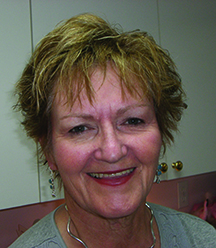
Ellen Lord, MS, RN, CNOR
“You need to integrate the didactic with the clinical setting,” says Ellen Lord, MS, RN, CNOR, a perioperative instructor for HealthOne in Denver. Best practices from the three organizations profiled in this article provide a framework for creating an internal program.
When an aggressive initiative to boost surgical volume at Tufts Medical Center in Boston translated into high demand for new staff, the director of professional development and two clinical instructors collaborated to create a nontraditional orientation program.
Novice nurses usually start their orientation in general surgery before branching out to specialties, but the Tufts team decided to start most of the new staff in specialties.

Patricia Wencis,
BSN, RN, CNOR
“We are so specialized that general surgery is almost disappearing,” says Patricia Wencis, BSN, RN, CNOR, clinical instructor for perioperative services at Tufts.
That approach has paid off. Tufts started the program in early 2016, and, to date, all novice nurses have successfully completed it.
“We have 19 new nurses working in 23 ORs,” Wencis says.
New graduate nurses and nurses without previous OR experience are eligible for the program. “In the first group, we had a few internal people who were handpicked, but most of the students were external,” Wencis says, adding that the same pattern holds true now.
Wencis and the director of professional development, clinical nursing directors, and experienced staff nurses interview candidates for the program. She and the director of professional development then make the final decision.
AORN’s Periop 101 provides the foundation for the didactic part of the curriculum, and the hospital also purchased laptops and textbooks for the nurses to use during the program.
Students complete assigned modules before the morning class, where instructors lead reviews of the material, and hands-on skills sessions are held in the afternoons.
“We find an empty room and go over things related to the module, such as sterile technique, equipment, or sutures,” says Wencis, who meets with individual students weekly to review progress.
Clinical rotations are assigned after students complete the modules and pass a final exam, which typically takes 4 to 5 weeks. Most students are assigned to specialties such as orthopedics, neurosurgery, ophthalmology, and ear, nose, and throat. Assignments are based primarily on the student’s interest.
“We have not seen any difference in performance between those in general surgery and those in a specialty,” Wencis says. After a year, novice nurses learn other specialties.
Students work with preceptors each day, and Wencis coordinates daily assignments. Initially, she meets weekly with the students as a group and individually to set goals and review progress.
“I make sure that their orientation is on a timely trajectory,” Wencis says. Once students are more established, meetings are less frequent. “I also do rounds once or twice a day to serve as a resource,” Wencis says. Students are evaluated based on AORN competencies.
Tufts currently has the fourth cohort enrolled. “Our goal is to have two sessions a year, with five nurses in each,” Wencis says.
Residency programs are typically linked to new graduate nurses, but at Carolinas HealthCare System (CHS) in Charlotte, North Carolina, investment in a perioperative residency for both new graduates and nurses new to the OR is paying dividends in terms of competent staff.
CHS has used Periop 101 since 2001, and added the formal residency component in late 2015. About 10% to 15% of the residency is spent in simulation activities.
Of the 62 RNs in the three cohorts that have completed the residency to date, 95% are still successfully working in the OR. Retention rates for new graduates are averaging 95%.
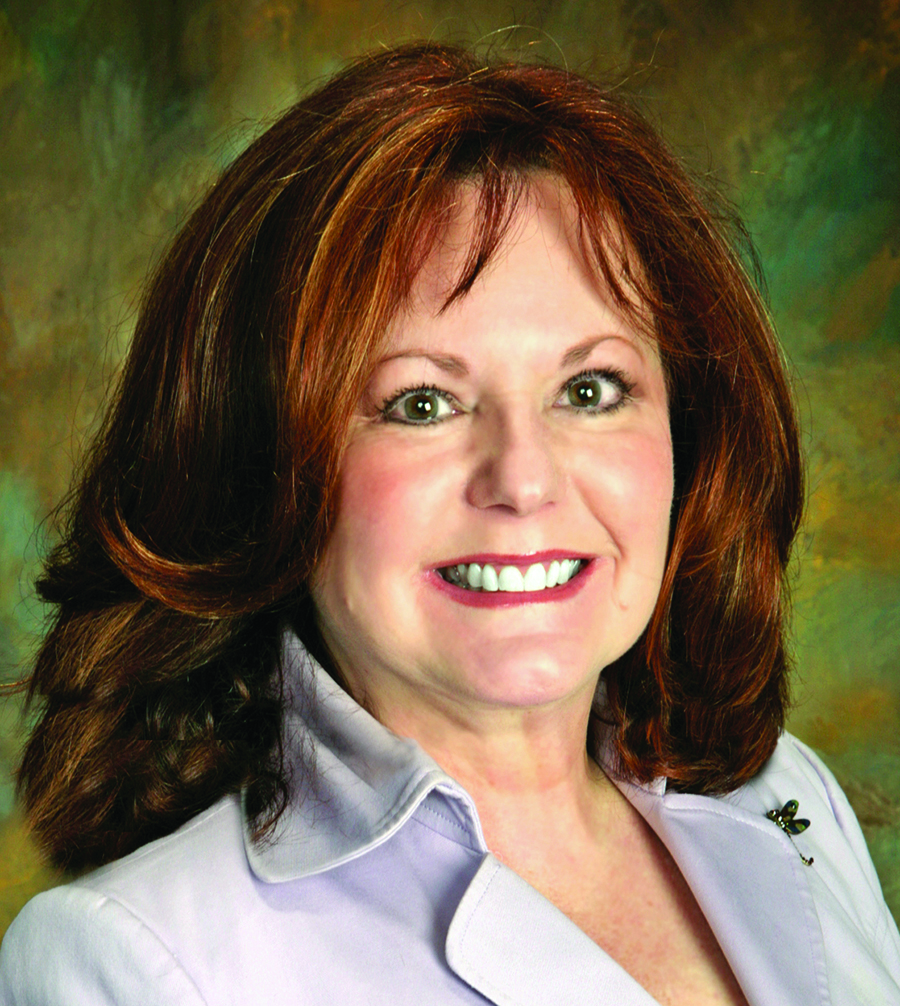
Ann Seal, MHA, BSN, RN, CNOR, NE-BC
“Before the residency program, it was 40% to 60%,” says Ann Seal, MHA, BSN, RN, CNOR, NE-BC, assistant vice president for perioperative services (metro) at CHS. The retention rate for experienced nurses is 87%.
CHS offers the residency two or three times a year, with about 30 slots in each cohort.
“We have 11 hospitals and multiple outpatient settings, so we usually fill the class,” Seal says. “The program has made a huge difference in terms of competency of new staff, and we’ve heard nothing but good things from our surgeons.”

Michelle Fortune, MBA, BSN, RN, CAPA, FACHE
The residency is marketed internally and externally. “We work with area colleges to build relationships,” says Michelle Fortune, MBA, BSN, RN, CAPA, FACHE, vice president for perioperative services (metro) at CHS.
“Our system has a large transition to practice for new grads, so this program is listed as an option [in marketing materials],” Fortune explains.
Nurses already within the system learn about the program through open houses, position postings, and fellow teammates.
Applicants must first shadow nurses in the OR. “They get a first-hand opportunity to see the role of circulator and scrub technician,” says Seal. “It’s important for them to be able to visualize what it’s like to work in the OR, so they know if it’s the right fit for them.”
Someone who wants to spend significant time interacting with patients and families might not be satisfied in the OR setting. Seal notes that fulfillment in the OR comes from advocating for patients when they can’t speak for themselves and working with a team of medical professionals.
“OR nursing also offers challenges for those who enjoy working in a highly technical and rapidly changing environment,” she says.
Open houses are scheduled twice a year at the start of recruitment for new nursing school graduates.
Candidates interested in pursuing a career in the OR are encouraged to shadow in the OR and can sign up at the open house before they graduate.
Open houses also give applicants the opportunity to talk with managers and staff so they better understand what different facilities offer.
Applicants then interview with the coordinator of the residency program as well as leaders and staff at the facility or facilities that interest them.
Nurses are hired into the program and earn a full-time salary during their residency.
The 6-month course includes didactic and clinical experience. The syllabus for the course serves as a guide for students.
“Each week is split between didactic and clinical experiences in the facility where the nurse will be working,” Seal says. Monday and Tuesday are dedicated to class and practice time, with the rest of the week in the “home” facility. Typically, two modules are covered during each class day.
Through the Carolinas Simulation Center, educators can tailor experiences to where each nurse will be working, whether it’s a Level 1 trauma center or a rural facility with one OR.
“We want every person to be effective in the location they work in,” Fortune says. Simulation situations are driven by the didactic portion of the course. For instance, information about malignant hyperthermia may be followed by a scenario on the topic in the simulation center.
Upon completing the course, nurses are precepted for a minimum of 4 to 6 weeks. “After that, we evaluate the nurse, and typically he or she is ready for a full case load,” Seal says.
CHS recently launched a postanesthesia care unit residency program with six students. “We’re starting more slowly because there isn’t a program like AORN’s Perioperative 101 course to build around,” Seal says. The system is also working with area colleges to create a perioperative elective course.
The perioperative nurse entry program (PNEP) at Beth Israel Deaconess Medical Center (BIDMC) in Boston is a 26-week fellowship that facilitates orientation of novice OR nurses. The program, which started in 2016, runs twice a year.
To date, six participants have completed the program. Many other staff members who were new to the OR completed the Periop 101 program, which started in 2002. The PNEP builds on the original program.
A bachelor’s of science in nursing degree is required to apply for the PNEP, and both new graduates and nurses new to the OR are eligible. Priority is given to internal applicants.
The program is marketed through email and social media.

Charlotte Guglielmi, MA, BSN, RN, CNOR
“We work very hard with faculty of colleges of nursing to engage them in providing students with clinical practicums during their senior year,” says Charlotte Guglielmi, MA, BSN, RN, CNOR, clinical manager of perioperative education at BIDMC. Those efforts have contributed to a nearly even split between new graduates and experienced RNs in the program.
Educators and directors screen resumes and covers letters from as many as 300 applicants. Of those, about 40 are invited to an open house where they can meet service line leaders and staff.
“We wanted to engage as many clinical staff as possible and give candidates a real feel as to what it would be like to work in the OR,” Guglielmi says. Perioperative nurse leaders also attend to answer questions.
Debra Savage, MSN, RN, CNOR, educator for the PNEP, kicks off the open house with an overview of perioperative services and the program. Candidates then rotate among three groups, with one group visiting the simulation lab in the OR and the other two visiting a variety of tabletop displays. “It’s like speed dating,” Savage says.
Candidates receive stickers with information about themselves that they give to those staffing the displays and simulation lab. BIDMC nurses talk with the candidates, asking questions that have been preapproved by human resources and making notes on the stickers based on their impressions.
“The staff love it,” Savage says of the open house. “They feel like they really know the candidates.”
Although interaction is informal, the open house is the first of a three-step interview process. Staff comments are collected, collated, and used to determine who will advance to the second step: a panel interview with unit-based educators who will support the nurses after they complete the PNEP.
The third interview is with the directors the nurse will report to. Guglielmi says talking with educators first puts candidates more at ease so they aren’t as nervous when speaking with the directors.
Candidates also complete an observation in the OR before they are offered a position. The observation can occur anytime from when someone expresses interest in the PNEP to before an offer is formally made.
Periop 101 serves as a basis for the curriculum, with a strong role for preceptors during the clinical experience.
In the first week, participants receive an overview of the program, general orientation information, and instruction on how to use the Periop 101 platform. The next 4 weeks include lessons on key topics such as safety and positioning.
During week 6, students start transitioning from the classroom to the OR, and then complete three phases of clinical orientation:
• Weeks 7-13 (Phase 1): Circulating and scrubbing basic cases with a preceptor, beginning specialty rotations per service line
• Weeks 14-17 (Phase 2): Surgical specialty rotations (both roles), with preceptor per service line
• Weeks 18-26 (Phase 3): Circulating and scrubbing in the assigned service line with a preceptor to foster independence and observations in other areas such as the preoperative unit and the postanesthesia care unit.
“We’re going into our third cohort,” Guglielmi says. Savage adds that the program has generated so much interest that, on average, two people per day complete an observation in the OR.
Anyone wishing to establish a program like those described here must approach it strategically. “Go into it with your eyes wide open, being realistic about how willing the administration is to devote pay and man-hours to people going through the program,” Lord says (sidebar at left).
To enhance that willingness, focus on the benefits. For instance, a well-organized OR education program ensures consistency, which can streamline future education.
“Everyone [in our system] knows the core knowledge of the new nurses,” Seal says. If a nurse transfers to another facility, the educators can better build on what is already known, reducing orientation time.
Another resource is AORN’s orientation calculator, designed to help determine costs of a program.
Smaller facilities can also develop orientation programs. “It’s important to recognize that you can have these types of programs in a range of facility sizes,” Seal says. “You need an educator who can oversee the program, preceptors, and hands-on practice in a nonthreatening environment.”
Simulation can include sophisticated manikins or scenarios that allow nurses to practice skills. “The more opportunity they have to practice, the better prepared they will be,” Seal says. ✥
Cynthia Saver, MS, RN, is president of CLS Development, Inc, Columbia, Maryland, which provides editorial services to healthcare publications.
AORN. Perioperative orientation resources: Your guide to recruitment and retention. http://www.aorn.org/aorn-org/education/facility-solutions/periop-101/perioperative-orientation-resources.
Hevner R, Wencis P. An innovative approach to the orientation of the novice nurse to the operating room. Poster. 2017 AORN Global Surgical Conference & Expo.
Those interviewed for this article offer the following tips for training novice nurses.
Gain support from leadership. “It’s an expense for the (AORN Periop 101) modules and training time, so you need to have support,” says Patricia Wencis, BSN, RN, CNOR, clinical instructor for perioperative services at Tufts Medical Center, Boston.
Charlotte Guglielmi, MA, BSN, RN, CNOR, clinical manager of perioperative education, says that funding for the program at Beth Israel Deaconess Medical Center (BIDMC), Boston, is from nonoperational dollars.
Partner with your human resources staff. “We have a sensational human resource partner,” Guglielmi says. “She’s a dynamic individual who knows her craft and has taken the time to understand the OR environment and the attributes we are looking for in a candidate.”
A human resources expert can also suggest creative methods for recruiting new graduates and nurses to the OR.
Give potential nurses the opportunity to see the OR in action. “There are many misconceptions about the intensity of the [OR] role, the complexity of the role, and the culture of the team environment we function in,” says Ellen Lord, MS, RN, CNOR, a perioperative instructor for HealthOne in Denver.
“It takes a distinct personality type to be successful, and you have to be a strong patient advocate.”
Providing observational experiences helps nurses see the reality of the role.
Build the curriculum thoughtfully. “You need to start with the foundation of the basic elements like surgical attire and build from there,” Lord says. For example, learners should complete Periop 101 modules in order.
Allow time for expertise to grow. Understand that it will be at least 6 months before the novice OR nurse can function with some independence. The length of time for full independence varies. Some nurses may be ready to circulate for uncomplicated open-heart surgeries immediately after training, whereas others may take longer.
Don’t make the groups too large. “Five is a good working number for clinical,” Wencis says.
Prepare and support preceptors. “The preceptors are the backbone of the program,” says BIDMC‘s Debra Savage, MSN, RN, CNOR. “You need them to reinforce what you teach and give day-to-day feedback.”
Preceptor tools from AORN are one resource. Wencis says. Tufts provided preceptor classes to prepare them for an influx of new people.
“It’s easy for experienced nurses to forget what it’s like to be in the third week of their first OR job,” she says.
Acknowledge that it can be hard to be a novice again. “With nurses coming from other areas, we discuss the issue of coming from where you had expertise into an environment where you’re new again,” says Lord.


