Despite the turmoil in healthcare, leaders of ambulatory surgery centers (ASCs) are a highly satisfied group, with 83% having a favorable view of their current position, according to the OR Manager 2017 Salary/Career Survey.
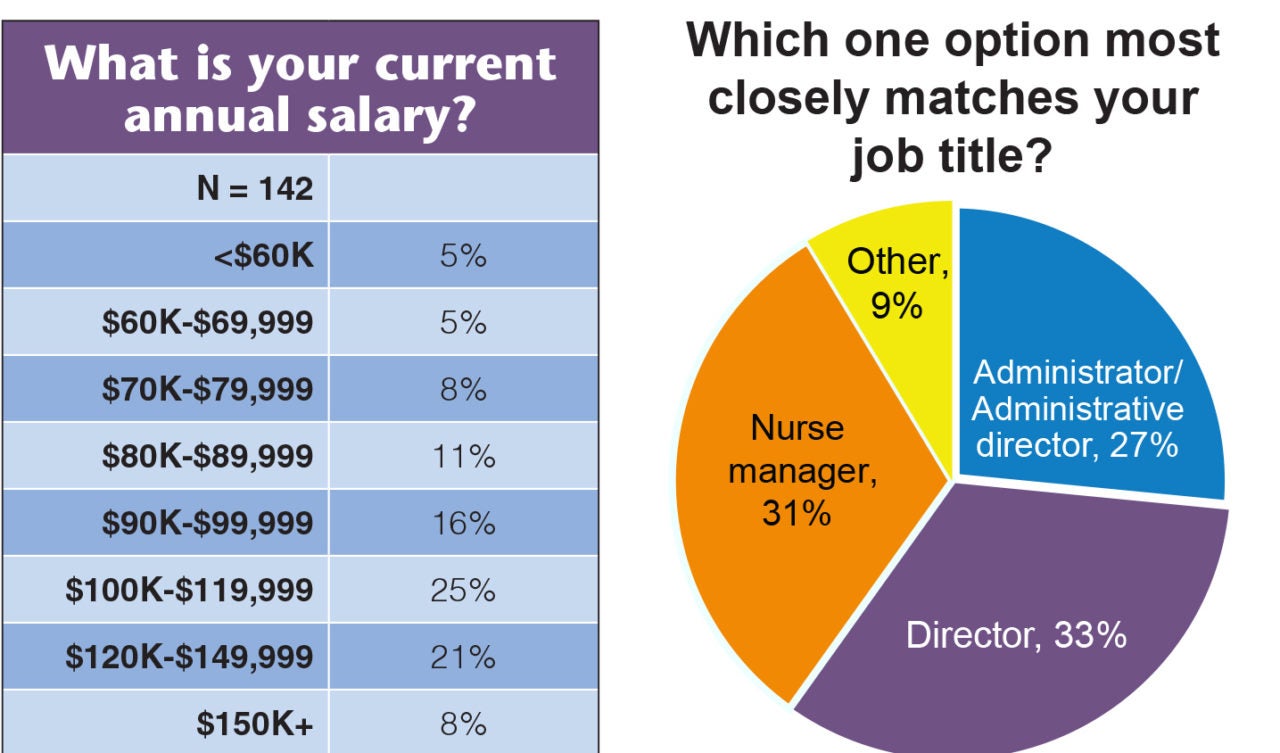 But ASC leaders are markedly less satisfied when it comes to their compensation, with 60% viewing it favorably. This isn’t surprising given that 74% haven’t received a raise in the past year, and salaries are essentially flat. This year 54% of respondents earned $100,000 or more annually, virtually unchanged from 53% in 2016. At the same time, nearly half (48%) of leaders reported surgical volume had increased over the past 12 months, and only 14% saw it decrease.
Other highlights from this year’s survey include:
• The average raise was 3.94%, comparable with 3.39% in 2016 and 3% in 2015.
• About 25% plan to retire by 2020, just 3 years down the road.
• More than two-thirds (67%) plan to stay with their current employer until retirement.
OR leaders in hospitals continue to earn more than their ASC counterparts. About 40% of hospital leaders earned $120,000 or more last year, compared with only 29% of ASC leaders. And only 5% of hospital leaders earned less than $70,000, vs 10% of ASC leaders. At the other end of the spectrum, 21% of hospital leaders earned $150,000 or more, compared with just 8% of ASC leaders.
ASC leaders based in the Northeast earned the most, with 72% reporting $100,000 or more a year in annual salary, followed by the Midwest and the South (53% for each), and then the West (45%). In the Northeast and South, the most common total compensation range was $120,000 to $149,999; in the Midwest, it was $100,000 to $119,999; and in the West, it was $90,000 to $99,999.
 Scope of the role
ASC leaders supervise an average of 39.83 employees (33.19 clinical employees and 6.64 nonclinical employees), up slightly from the 36.84 reported in 2016. They manage anywhere from one to 36 ORs, and the average for those managing more than 10 was 18.22. About 70% of respondents manage one to five ORs.
Position titles were fairly evenly divided among administrator or administrative director (43%), director (54%), and nurse manager (51%).
Only 63 OR leaders responded to the question about the annual operating budget they managed. Of those, most (24%) manage a budget of $5.0 million to $9.9 million, followed closely by $3.0 million to $4.9 million (22%) and $1.0 million to $1.9 million (21%). Only 3% manage a budget of $15 million or more, and 5% manage a budget of less than $1 million.
The survey provided additional insights into ASC leaders.
ASC leaders view patient satisfaction with OR services most highly (95%), followed by their current position (83%). Only 6% of respondents had an unfavorable view of their position. Job satisfaction in other fields tends to range from the low to mid 70s percentage points.
Satisfaction with staff and physician engagement was about equal, at 75% and 72%, respectively. However, satisfaction dropped when it came to total compensation (60%), benefits provided (69%), and support provided by the leader’s boss (67%).
 Retirement looms for the 25% of respondents who will be “wheels out” of the ASC by 2020. A total of 23% said they plan to retire between 2021 and 2023, but 37% plan to wait until 2026 or later, providing a bit of breathing room for some facilities.
Most respondents (67%) plan to stay with their organizations until retirement. Of those not planning to stay until then, 11% plan to leave in 3 to 5 years, and 3% plan to leave within a year.
Overall demographics are listed in the infographic, right. The average age of an ASC leader (53.20 years) is higher than the 48.8 years for nurses reported in the 2015 National Nursing Workforce Survey. That same survey noted that the most common age cohorts for nurse executives were 55 to 59 and 60 to 64, with each having 14.8% of respondents with that title. Most nurse managers fell into the cohorts of 55 to 59 (16.6%) or 50 to 54 (12.4%).
Most ASC leaders (42%) report a baccalaureate as their highest earned degree, followed by a master’s degree (29%), both comparable to 2016. Only two people reported having a doctorate degree, and 20% reported their highest degree was an associate degree in nursing.
Most ASC leaders report stable or increased volume over the past year, yet compensation remains flat. Still, the majority of leaders remain satisfied with their positions.
Cynthia Saver, MS, RN, is president of CLS Development, Inc, Columbia, Maryland, which provides editorial services to healthcare publications.


