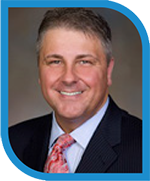
Stuart Downs, DNP, RN, NEA-BC, CENP, CPHQ, FACHE, FAONL
All leaders at some point in their careers should find ways to reward and recognize their staff. But what most leaders fail to grasp is, the heart behind the reward is immediately apparent and matters almost as much as the reward itself. Stuart Downs, DNP, RN, NEA-BC, CENP, CPHQ, FACHE, FAONL, who has been widely recognized for his authenticity, sat down with OR Manager and broke down the genuineness behind his leadership.
Downs is currently nursing administrator of Northside Hospital Gwinnett, Lawrenceville, Georgia, and oversees all inpatient care units, which comprise both acute and critical care services and all cardiac/cardiology services. Downs is also a member of AORN’s Fellowship Committee and a Fellow of the American Organization of Nursing Leadership (FAONL). Downs has been a chief nursing officer (CNO), chief operating officer (COO), and interim chief executive officer (CEO) at various health systems.
I have been a nurse leader for about 20 years. I began my career in critical care and found my way into executive nursing leadership. I never set out to get into management. I had to undergo a foot reconstruction, and the 12, 13 hour-shifts on my feet became unbearable. I thought, “If I can’t take care of patients, I’m going to take care of those who take care of patients.”
I have been described all my life as a nurse’s nurse, and I took up the mantle of mentoring and mentorship. I have had great mentors in my life, and with their investment in me, I have had great successes as a leader. I was CNO for many years, then COO, and then interim CEO a year later. Through these steps up the ladder, I have always had a director or vice president of surgical services report to me and have overseen the strategic portions of the specialty from a business and strategy perspective.
It starts with a solid, organizational, strategic plan. Once we know our growth/operational strategy, then we determine how the various departments fit into that model. From there, we sit down with the leaders and develop SMART goals around said strategy, as well as tactics to accomplish those goals within a set timeline. But at the top, we have to have a very clear picture of the organizational growth plan. If we go to our department leaders with a nebulous “get this done,” it is a huge disservice to them. I have never had good buy-in with just that. It has to be a partnership.
And those at the top know how critical it is to have a strong partnership with perioperative leaders. I relay our larger goals to them in what I call “bite-size chunks”: we want to accomplish this item in this quarter and this other item next quarter. It is with this level of transparency that I succeed in selling the vision and getting the buy-in that leads to a collaborative partnership.
Then you monitor and look at the results around those conversations. For example, in order to implement a really solid neuro intervention strategy, we met with leaders from the neuro labs all the way to the OR. You get them to see how they fit into the strategy and get their buy-in. That becomes shared leadership, shared governance. That is how you mitigate firefighting.
I believe you successfully navigate politics when you have good relationships with surgeons and other physicians. You need a strong governance committee in perioperative services so there is fairness and equity across the board. Otherwise, you are going to get deep into some political issues that can be detrimental to leaders and to careers. So, have set policies and governance standards to help you navigate relationships, and then build good relationships with physicians. Any effective OR leader will attest to this; you have to have physician ownership of practices and policies within the perioperative space to help you implement and navigate initiatives.
That it is impossible to please everyone. I am a people pleaser because I am an authentic leader. When I describe my leadership style, I say I am authentic because I believe authenticity breeds and builds trust. You can’t run an OR, even from a higher level, without trust. But it is also hard being someone who is highly relational and authentic because I want to please everybody. And it is impossible. If I am ever caught in those crosshairs, stuck between opposing needs of two or three providers, I ask this question: What is in the best interest of the patient? That is the quickest way to get everyone to zero in on a compromise. And then I say, “Let’s all partner in this decision together.”
I once worked in a union environment where we were trying to impart to the staff that they did not need a union to represent them. We had good leaders at that organization who wanted the best for them and were going to invest in them. That union was a non-nursing union that had a strong hold in the organization, particularly in the OR. The tough decision I made was to remove a leader who had been there a long time, which is never easy. It is a decision that sometimes comes with political ramifications. But once we made that change and people began to see the positive impact, the union was decertified by the very team members who initially voted for it. It had a great outcome, but it was really tough to make that decision.
The pandemic has made leaders more visible to those at the front lines. It is very hard to lead through a pandemic behind closed doors in an office and not be in touch with what is going on at the front lines of care. Many nurse leaders across the country have learned this lesson. The pandemic also changed the face of leadership from an employee engagement perspective. You can’t do anything without people. You have got to take care of your people, first and foremost. Historically, leaders have had the finance pillar, the growth pillar, the service pillar, the quality pillar, and then the people pillar buried in the middle somewhere. That has absolutely changed. If you don’t put that people pillar first, nothing else matters. The pandemic has caused leaders, particularly in nursing, to become more in touch with their teams and those who are providing care at the front lines.
We have lost so many nurses to travel positions. I know some people take that personally. I have a different opinion. I know these nurses are leaving because they need the money. How can we blame them? I have said the same thing to everyone in my organization who left to go travel: “I understand why you’re going. I don’t fault you for going. I want you to know you can come home whenever you’re ready.” Essentially, I’ve learned to re-recruit my staff, and I term it “recruitment at resignation.” I can’t tell you how many who left to travel have already come back, and how many are thankful that we welcomed them back. Some people may not ascribe to that philosophy, but I stand by it because you can’t get good outcomes, hit quality metrics, or fulfill your strategic plan without people.
It takes a different mindset to approach staffing currently, and we must change the narrative. For instance, I stopped using the word “burnout.” The more you talk about burnout, the more people feel burned out. I don’t mean to minimize the current crisis we are in, but we are at a point where we have to figure out how we are going to live in this world and still get outcomes. I hope I am doing right by the folks who left to go travel, but I also have a lot of people who stayed. I could spend all my time worrying about the 5% or 8% who left, or I could focus on the 90% who stayed.
I am working on a “You Stayed” campaign with about 12 other leaders in my organization. We are interviewing people to understand what made them stay. It certainly wasn’t pizza at staff meetings, or the drive-bys with people honking and putting up signs calling us heroes. All of that was great and so needed, but we are past that and into a real nursing shortage crisis, and we have people who still stayed. We want to understand their motivations; what we need to do to make them feel valued; and how we can continue to promote resiliency. We want to reward and recognize them, but it has to be meaningful. I am inspired by our nursing staff every day. Let’s talk about dedication rather than resignation.
Motivation happens with transparency and communication. That is a characteristic of authentic leadership. I communicate, communicate, then communicate again. People are much more motivated to help you achieve goals when they are well informed. And that is not just my impression, it is actual feedback I have gotten. At staff meetings or town halls, I have people saying, “Thank you for telling us. Thank you for talking to us.”
For instance, when the pandemic first hit, it was touch and go with having enough personal protective equipment. I was transparent about that from the start. I said, “You know what? We don’t have enough N95 masks, so we’re going to have to reuse. We’re going to figure out how to reprocess these.” And we figured it out as a team. It wasn’t a directive sent down from the top; it was open communication that got us through the initial shortage.
You also keep people motivated when you ask them for their opinion when appropriate. Sometimes that is not the right approach, but there are times when you should be going to your staff and asking, “Hey, this is a decision we’re thinking of making. What do you think?” Anytime you are inclusive in leadership, or in other words, exercising participatory leadership and inviting others to participate in decisions, people stay motivated.
I am proud every time I succeed in making my staff feel valued. I have done something for the last three years that was noted in the nomination narrative of an award I received; I find out through my managers who the family members or significant others are of every employee working Christmas day or Christmas Eve. And I send them a card saying, “I want to thank you for sharing “Amy” with us. Amy is a valuable member of our team, and we know we cannot make it without her. I know it’s unfortunate that she had to work the Christmas holiday this year and be away from her family. Rest assured that the impact she had working this shift was profound on the patients who were hospitalized over the holiday.” I’ve had people come to my office in tears to thank me for recognizing them to their families. Some have put the card up on their refrigerators and sent me pictures. This is what I mean when I talk about meaningful recognition.
I am a staunch supporter and constituent of the American Organization for Nursing Leadership (AONL). I served on the national AONL board and still serve on many committees. I was instrumental in helping write the business plan to get the AONL Executive Fellowship approved. To date, approximately 59 nurse leaders across the country have gone through that program and are now practicing some form of executive leadership.
Another proud outcome is mentoring three nurse leaders who now serve in CNO roles. The impact you can have at that level of leadership is much grander than being a small segment leader. Having three people at that level today whom I have personally mentored and still talk to makes me really proud.
Competencies are key. I always start with the basics of the AONL Nurse Executive Competencies. I’ve said it numerous times, it takes two things to be a good leader: first is will, and second is skill.
If you got will, I can train skill. I can take that competency assessment and say, “We need to strengthen your informatics and hone in on your finance skills so you’re prepared for the next budget cycle.” I can train skills all day long, but if they do not want to do it, if they do not believe in themselves or it is not their passion, then it is not going to work. I look for passion in people. I consider these questions: Do they actually want it? Do they have love for people? Are they going to take care of and help advance this group of nurses that I’ve entrusted to them?
Then I watch. Once I have given them one or two units, I see how they do. From there, the responsibility broadens, and I see I was right in investing in them because now they are running four 500-bed hospitals with great success.
To pace myself and have more work/life balance. Earlier in my career, I would work 13, 14, 15 hours a day. While it was great for the organization, it was terrible for my family. Thankfully my family has never wavered, and I’ve always had their steadfast support. But I would tell my younger self to spend more time with my kids growing up and not let the job consume me as much. The work will be there tomorrow.
I would also say: no physician, no patient. When I first became a nurse leader, I thought it was all about nursing. I learned quickly that a nurse can’t admit or write admission orders. I would have developed stronger relationships with physicians earlier. And I would add, in that same vein, it is not just about nursing. It is also about all the people who support nursing because a nurse is not an island. There were many times when I could have been more inclusive with support service departments, like the lab, pharmacy, imaging, and so on. I would have told my younger self, “Be a more inclusive leader. It’s not all about you. It’s about the team.”
There are leaders, and then there are leaders of people. There is a difference.
Leaders of people are authentic. They have great self-awareness. They lead from a mindfulness perspective and are mindful of their teams. They lead with heart. Yes, we focus on results, both short- and long-term, but leaders of people also practice with ethical character in all they do, never wavering in that approach. They lead with vision and can get other people to rally around their vision.
It is human nature to gravitate toward winners and people who will lead them to success. I know I am winning when I am achieving the vision of the organization. Whenever one can take a moment and reconnect the team to the organization’s vision and its applicability to their specific roles, they too will feel they are winning, and that is powerful.
Everyone matters. Everyone has inherent value and worth. When people feel that from their leader, that leader’s team becomes unstoppable.
—Amy Bethel, MPA, BSN, RN, NE-BC, is education coordinator for the OR Business Management Conference and member of OR Manager’s Editorial Advisory Board. She started as an orthopedic staff nurse and spent over 35 years in various management positions in surgical services.


