 Surgery/Specialties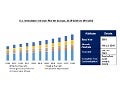
Editor's Note The global ambulatory services market was valued at $2.3 trillion in 2016 and is forecast to grow to $3.7 trillion by 2024, according to a new study by Ameri Research. In 2016, primary care offices accounted for the majority of market share at more than 48% because they…
Researchers at the University of Michigan (U-M), Ann Arbor, have invented a new surgical instrument with the goal of addressing a vast, unmet need in minimally invasive surgery. For less than a thousand dollars, this platform technology—currently being commercialized by the start-up FlexDex Surgical—offers capabilities similar to those of the…
Surgeons usually don’t have a high awareness of costs, partly because they haven’t had an easy way to know them. An unfortunate byproduct of this lack of knowledge can be higher OR costs. “Imagine what it’s like if, when you go to the grocery store, there are no price tags,…

Editor's Note The American College of Rheumatology (ACR) and American Association of Hip and Knee Surgeons (AAHKS) have released a new guideline to help reduce postoperative total hip and knee infections through the perioperative management of antirheumatic medications. Among the recommendations: Discontinuing biologic therapy before surgery in patients with inflammatory…

Editor's Note Failure to rescue occurs predominantly in patients who have more than one complication with a dose-response relationship as complications accrue, this study finds. More than 266,000 patients in the Veterans Affairs Surgical Quality Improvement Program were included in the analysis. Of those who had a complication, more than half…

Editor's Note Discharge from the postanesthesia care unit (PACU) without assessment of lower limb motor function after spinal anesthesia for total hip or knee arthroplasty did not increase length of hospital stay or readmissions but significantly reduced time in the PACU (0.40 vs 1.56 hours), this study finds. This multicenter…

Editor's Note Trauma centers verified by the American College of Surgeons Committee on Trauma (ACS-COT) have fewer complications among pediatric, elderly, and severely injured patients, finds this study. The odds of experiencing any major complication were more than 3.0 times greater for elderly patients in trauma centers without ASC-COT verification…
Editor's Note For the first time, less than half of physicians have an ownership stake in their practices, according to a study by the American Medical Association. Surgical sub-specialties have the highest share of physician owners (59.3%), followed by radiology (56.3%). Emergency medicine has the lowest share of owners (27.9%)…

Editor's Note Using patient-specific preoperative variables, a validated logistic regression model predicted transfusions in total hip and knee patients in this study. The model identified preoperative hemoglobin, total hip arthroplasty, and females 65 years of age and older as predictors of perioperative transfusions. The model also may help identify those…

Editor's Note Thirty-day data from the 225-patient LUCY (Evaluation of FemaLes who are Underrepresented Candidates for Abdominal Aortic AneurYsm Repair) Study showed that at least 28% more women became eligible for minimally invasive endovascular abdominal aortic aneurysm (AAA) repair when using Endologix’s (Irvine, California) Ovation abdominal stent graft system, according…