Enhanced Recovery After Surgery (ERAS®) is a comprehensive, multifaceted, and multidisciplinary approach to the care of the surgical patient. ERAS bundles evidence-based elements to facilitate a faster recovery with fewer complications.1
Spanning the continuum of perioperative care, ERAS elements include:
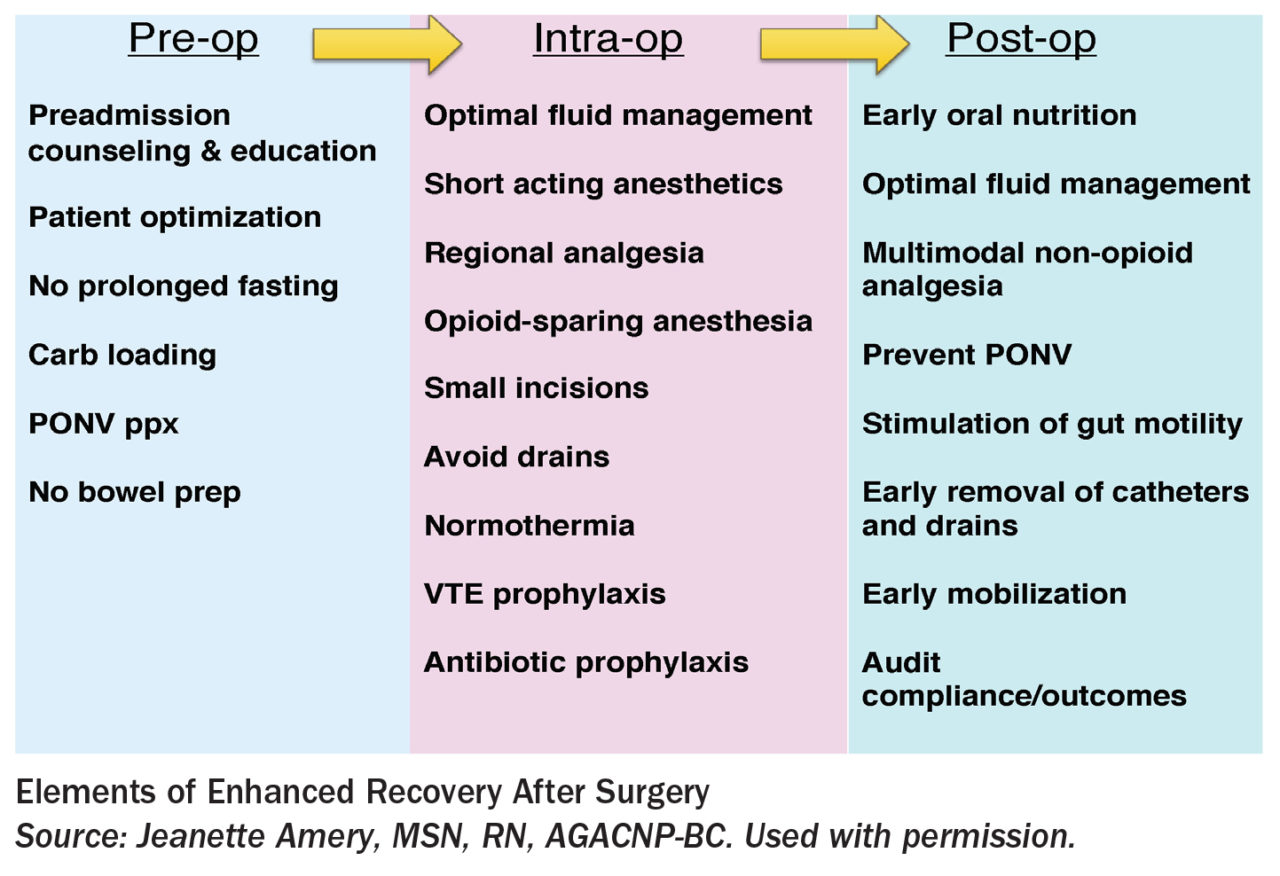 • patient engagement and education
• preoperative optimization of nutrition and medical conditions, such as anemia
• carbohydrate loading and avoidance of prolonged fasting
• multimodal opioid-sparing pain management, including regional anesthesia or nerve blocks
• optimal fluid and blood pressure management
• a preference for minimally invasive surgical techniques
• judicious use of nasogastric tubes, lines, and drains
• early postoperative feeding and mobilization (sidebar above).
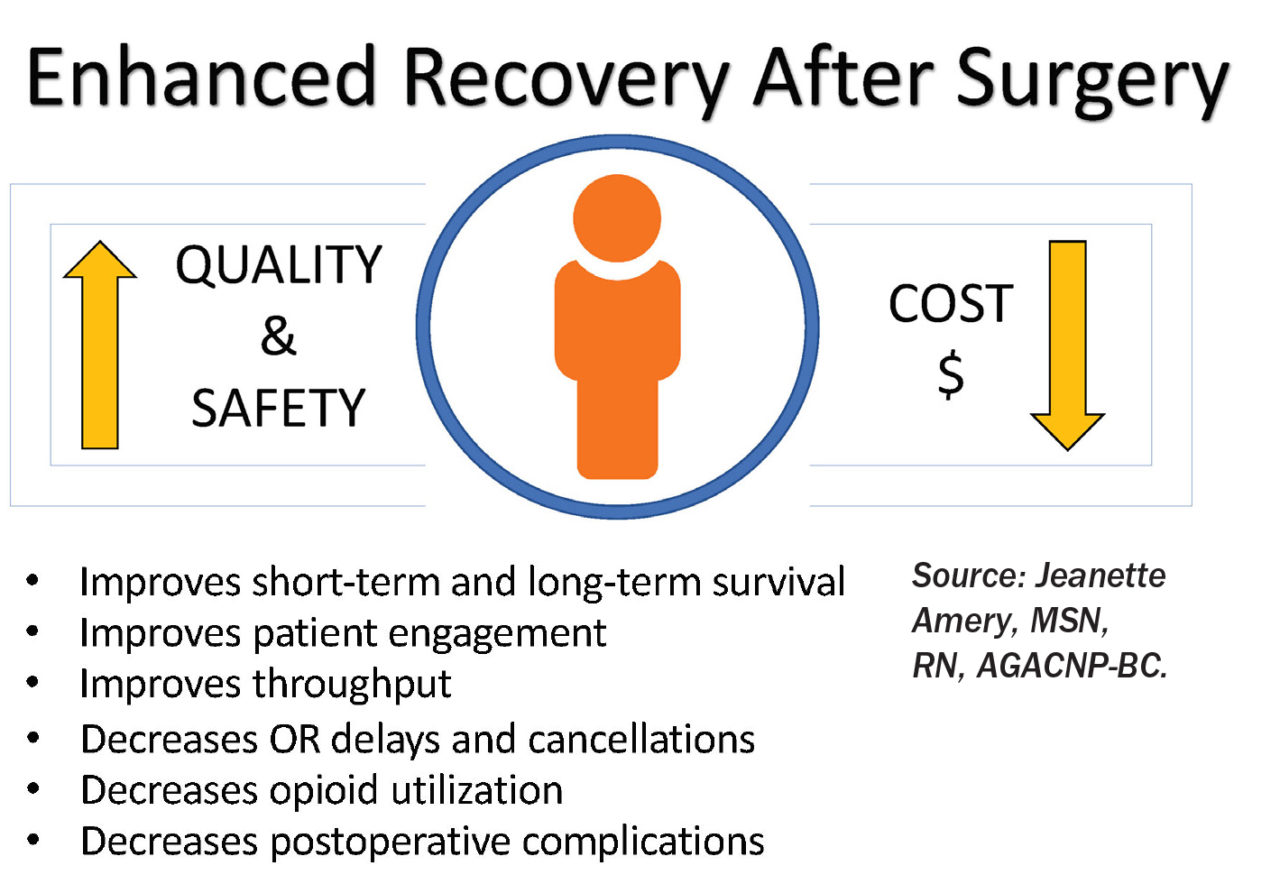
Collectively, ERAS elements preserve homeostasis by reducing the body’s stress response to surgery and improving the metabolic response in the recovery phase.2 This translates into better overall outcomes, including lower morbidity and mortality, decreased opioid utilization, and shorter hospital stays.3
ERAS emerged from the concept of fast-track surgery, pioneered in the 1990s by Henrik Kehlet, MD, PhD, a Danish colorectal surgeon. Dr Kehlet recognized that many traditional approaches to care, such as routine use of nasogastric tubes and enforced bedrest and fasting, delay recovery and prolong hospitalization.4 By challenging these practices, he effectively decreased length of stay (LOS) post colonic resection from an average of 5-10 days to 2 days, and decreased the risk of postoperative morbidity.4, 5
Impressed by Dr Kehlet’s work, a group of European academic surgeons formed a study group to review the literature and develop best practice protocols for perioperative care. The group coined the term Enhanced Recovery After Surgery (ERAS) to shift the focus from LOS, implied by the words “fast-track,” to a broader emphasis on holistic quality of recovery. In 2005, they published the first ERAS consensus protocol for colonic surgery1 and, in 2010, founded the nonprofit ERAS Society.6
Across the continuum of care, from preoperative optimization to reduced homeostatic disruption in the OR, to protocolized postoperative de-escalation, ERAS elements enhance patient recovery by mitigating the negative effects of the stress response.
Cellular injury from the surgical incision, traction, cauterization, blood loss, and changes in tissue perfusion provokes release of cytokines and inflammatory mediators as well as a host of immunologic, metabolic, and hormonal effects, that is, the stress response.2 Surgical stress causes insulin resistance and catabolism, increasing risk for general and infectious postoperative complications.7
Several ERAS elements effectively reduce insulin resistance: preoperative oral carbohydrate loading, use of epidural/spinal anesthesia and nerve blocks, and early postoperative feeding and mobilization.8 In addition, factors that may heighten the surgical stress response, such as anxiety, hunger, pain, and immobility, are addressed by minimizing fasting, incorporating a multimodal pain regimen, and facilitating early postoperative mobility.2, 8
Before an elective procedure, the goal is to ensure the patient is in the best possible condition in preparation for the operation. Clinicians focus on patient education and medical optimization, including targeted management of comorbidities such as diabetes, hypertension, and anemia, and address nutritional status, functional limitations, and substance use.
Unnecessary fasting is avoided to ensure patients are adequately hydrated and nourished.3 Patients may eat a light meal up to 6 hours beforehand and drink an isotonic carbohydrate drink and/or clear liquids up to 2 hours before anesthesia induction.9 The preoperative carbohydrate load decreases postoperative insulin resistance and protein catabolism, and reduces risk of postoperative nausea and vomiting (PONV).10
 In the OR, the goal is always to perform a surgical procedure safely with minimal disruption to homeostasis. Surgeons use minimally invasive techniques when possible and avoid inserting extraneous lines and drains to control the extent of direct cellular injury. Anesthesiologists support hemodynamics and maintain normal intravascular volume, oxygen delivery, and normothermia; administer antiemetics for PONV prophylaxis; and use short-acting anesthetics as well as a multimodal analgesia regimen.
Multimodal analgesia includes scheduled acetaminophen, gabapentinoids, and nonsteroidal anti-inflammatory drugs (NSAIDs); local and regional anesthetic agents and blocks; ketamine; and/or lidocaine. Regional nerve blocks, the mainstay of multimodal opioid-sparing pain management, are shown to decrease intraoperative anesthesia need as well as postoperative opioid use.11, 12
Opioids are minimized to prevent the potential side effects known to slow recovery, such as drowsiness, nausea, vomiting, constipation, and ileus, and to decrease the risk of opioid-induced hyperalgesia and risk for ongoing dependence.8, 13
Adequate pain management reduces the stress response, including insulin resistance, and facilitates early postoperative mobilization and diet tolerance.3A multimodal strategy targeting pain via different pathways improves overall analgesia and minimizes doses of any single agent.13
Another key intraoperative element is to maintain normal intravascular volume and reduce fluid shifts. Non-invasive technology to monitor flow-related parameters, such as cardiac output and stroke volume variation, facilitates more accurate management of fluid status through individualized goal-directed fluid therapy.14 Traditional reliance on static parameters, such as heart rate, blood pressure, central venous pressure, and urine output, are not accurate in predicting fluid responsiveness. Hypervolemia, which leads to interstitial and pulmonary edema and increases risk for ileus and pulmonary complications, is avoided. 8
In the postoperative period, the goal is to return patients to their preoperative baselines as soon as possible. Lines and drains, such as Foley catheters and intraabdominal drains, are removed early to reduce pain, decrease infection risk, and allow mobilization.3 Early mobilization is recommended—the harmful effects of prolonged bedrest are well established.15
Diet is advanced as tolerated, starting with clear liquids once the patient is awake and alert. Early enteral feeding after surgery is associated with decreased mortality and morbidity, even in patients who have undergone gastrointestinal surgery, and is necessary to support the acutely high-energy requirements.16 Patients should be prescribed protein drinks every 4 to 6 hours at a minimum. In an ERAS pathway, patients are drinking and eating, and intravenous fluids are discontinued on the first postoperative day.17
The beneficial impact of ERAS on outcomes is well described in the literature, especially in colorectal surgery, the surgical specialty for which ERAS was originally developed.18-20 Research links ERAS to lower morbidity and mortality; shorter LOS; decreased opioid use; improved patient experience, including self-reported health-related quality of life; and significant cost savings.3, 21, 22 ERAS has been applied to multiple surgical specialties around the globe, demonstrating comparable favorable outcomes.3, 21
The financial benefits of ERAS are primarily reduced complication rates and shorter hospital LOS with fewer, or unchanged, readmission rates.3, 23, 24 Data on specific intraoperative costs of ERAS implementation are limited and vary among studies. Intraoperative costs directly correlate to duration of OR and anesthesia time.
Use of standard protocols and increased experience help to decrease overall surgery and anesthesia time and thus decrease OR-related costs.25, 26
With the increasing recognition and acceptance of ERAS principles, tertiary care centers across the US continue to embrace the ERAS approach and seek to implement the guidelines in the pursuit of high-quality, cost-effective care. The ERAS Society continues to publish and update guidelines, including evidence-based guidelines for colectomy, pancreaticoduodenectomy, liver resection, gastrectomy, cardiac surgery, lung surgery, and breast reconstruction.27 Following the 2018 1st World Congress on ERAS in Pediatrics in Richmond, Virginia, guidelines for the pediatric population are in development.
The US-based chapter of the ERAS Society (ERAS USA) and the American Society of Enhanced Recovery (ASER) are two nonprofit organizations committed to advancing enhanced recovery practices and ERAS protocols through education, research, and implementation efforts.28, 29 In addition, the Agency for Healthcare Research and Quality (AHRQ) recognizes the high value of ERAS and funds a joint collaboration of the American College of Surgeons and The Johns Hopkins Armstrong Institute for Patient Safety and Quality to facilitate the spread of ERAS across the US in 850 institutions.30 ERAS is emerging as the new standard for perioperative care, and the time to implement it is now. ✥

Michael J. Scott, MB, ChB, FRCP, FRCA, FFICM, is professor, department of anesthesiology, and director, division of critical care anesthesiology, at Virginia Commonwealth University Hospital in Richmond. He is also adjunct professor, department of anesthesia and critical care medicine, at the Perelman School of Medicine, University of Pennsylvania, in Philadelphia.

Jeanette Amery, MSN, RN, AGACNP-BC, is nurse practitioner, department of surgery, division of transplant surgery, at Virginia Commonwealth University Hospital in Richmond.
1. Fearon K C H, Ljungqvist O, Von Meyefeldt M, et al. Enhanced recovery after surgery: A consensus review of clinical care for patients undergoing colonic resection. Clin Nutrition. 2005;24(3):466-477.
2. Scott M J, Miller T E. Pathophysiology of major surgery and the role of enhanced recovery pathways and the anesthesiologist to improve outcomes. Anesthesiol Clin. 2015;33:79-91.
3. Ljungqvist O, Scott M, Fearon K C. Enhanced recovery after surgery: A review. JAMA. 2017;152(3):292-298.
4. Kehlet H, Wilmore D W. Evidence-based surgical care and the evolution of fast-track surgery. Ann Surg. 2008;248(2):189-198.
5. Kehlet H, Mogensen T. Hospital stay of 2 days after open sigmoidectomy with a multimodal rehabilitation programme. Br J Surg. 1999;86(2):227-230.
6. Ljungvist O. ERAS—Enhanced recovery after surgery: Moving evidence-based perioperative care to practice. J Parenteral Enteral Nutrition. 2014;38(5):559-566.
7. Ljungqvist O. Insulin resistance and outcomes in surgery. J Clin Endocrinol Metab. 2010;95(9):4217-4219.
8. Scott M J, Urman R D. Concepts in physiology and pathophysiology of enhanced recovery after surgery. Internat Anethesiol Clin. 2017;55(4):38-50.
9. American Society of Anesthesiologists. Practice guidelines for preoperative fasting and the use of pharmacologic agents to reduce the risk of pulmonary aspiration: Application to healthy patients undergoing elective procedures. An updated report by the American Society of Anesthesiologists Task Force on Preoperative Fasting and the use of pharmacologic agents to reduce the risk of pulmonary aspiration. Anesthesiology. 2017;126:376-393.
10. Bilku D K, Dennison A R, Hall T C, et al. Role of preoperative carbohydrate loading: A systematic review. Ann Royal Coll Surg England. 2014;96(1):15-22.
11. Kokulu S, Baki E D, Kaçar E, et al. Effect of transversus abdominis plane block on cost of laparoscopic cholecystectomy anesthesia. Med Sci Monitor. 2014;20:2783-2787.
12. White P. The changing role of non-opioid analgesic techniques in the management of postoperative pain. Anesth Analg. 2005;101:Suppl 5,S5-S22.
13. Beverly A, Kaye A D, Ljungqvist O, et al. Essential elements of multimodal analgesia in enhanced recovery after surgery (ERAS) guidelines. Anesthesiol Clin. 2017;35(2):e115-e143.
14. Wuellner L, Sutton L. Intraoperative fluid management guided by esophageal Doppler monitoring in major abdominal surgery utilizing the Enhanced Recovery After Surgery program: A systematic review protocol. JBI Database of Systematic Reviews and Implementation Reports. 2016;14(7):3-10.
15. Gustafsson U O, Scott M J, Hubner M, et al. Guidelines for perioperative care in elective colorectal surgery: Enhanced Recovery After Surgery (ERAS) Society recommendations: 2018. World J Surg. 2019;43(3):659-695.
16. Wischmeyer P E, Carli F, Evans D C, et al. American Society for Enhanced Recovery and Perioperative Quality Initiative joint consensus statement on nutrition screening and therapy within a surgical enhanced recovery pathway. Anesth Analg. 2018;126(6):1883-1895.
17. Scott M, Martindale R. Perioperative nutrition: A high-impact, low-cost intervention. Anesth Analg. 2018;126(6):1803-1804.
18. Greco M, Capretti G, Beretta G, et al. Enhanced recovery program in colorectal surgery: A meta-analysis of randomized controlled trials. World J Surg. 2014;38(6):1531-1541.
19. Thiele R H, Rea K M, Turrentine F E, et al. Standardization of care: Impact of an enhanced recovery protocol on length of stay, complications, and direct costs after colorectal surgery. J Am Coll Surg. 2015;220(4):430-443.
20. Varadhan K K, Neal K R, Dejong C H, et al. The enhanced recovery after surgery (ERAS) pathway for patients undergoing major elective open colorectal surgery: A meta-analysis of randomized controlled trials. Clin Nutrition. 2010;29(4):434-440.
21. Ljungqvist O, Young-Fadok T, Demartines N. The history of Enhanced Recovery After Surgery and the ERAS society. J Laparoendoscop Adv Surg Techniques. 2017;27(9):860-862.
22. Gan T J, Scott M, Thacker J, et al. American Society for Enhanced Recovery: Advancing enhanced recovery and perioperative medicine. Anesth Analg. 2018;126(6):1870-1873.
23. Aggarwal P, Young-Fadok T M. Cost benefit of implementing Enhanced Recovery After Surgery (ERAS) program in colorectal surgery: A single institution study. J Am Coll Surg. 2016;223(4):Suppl 2, e6-e7.
24. Gaëtan-Romain J, Ljungqvist O, Wasylak T, et al. Beyond surgery: Clinical and economic impact of Enhanced Recovery After Surgery programs. BMC Health Services Research. 2018;18:1008.
25. Joliat G R, Labgaa I, Petermann D, et al. Cost-benefit analysis of an enhanced recovery protocol for pancreaticoduodenectomy. Br J Surg. 2015;102(13):1676-1683.
26. Oh C, Moriarty J, Borah B J, et al. Cost analysis of Enhanced Recovery After Surgery in microvascular breast reconstruction. J Plastic Reconstruct Aesthetic Surg. 2018;71(6):819-826.
27. ERAS Society. www.erassociety.org/guidelines/list-of-guidelines/.
28. American Society for Enhanced Recovery. www.aserhq.org/web/about-us/mission/index.html.
29. ERAS USA. www.erasusa.org/about/.
30. Agency for Healthcare Research and Quality. AHRQ safety program for improving surgical care and recovery. http://www.ahrq.gov/professionals/ quality-patient-safety/hais/tools/enhanced-recovery/index.html.


