 Sterile Processing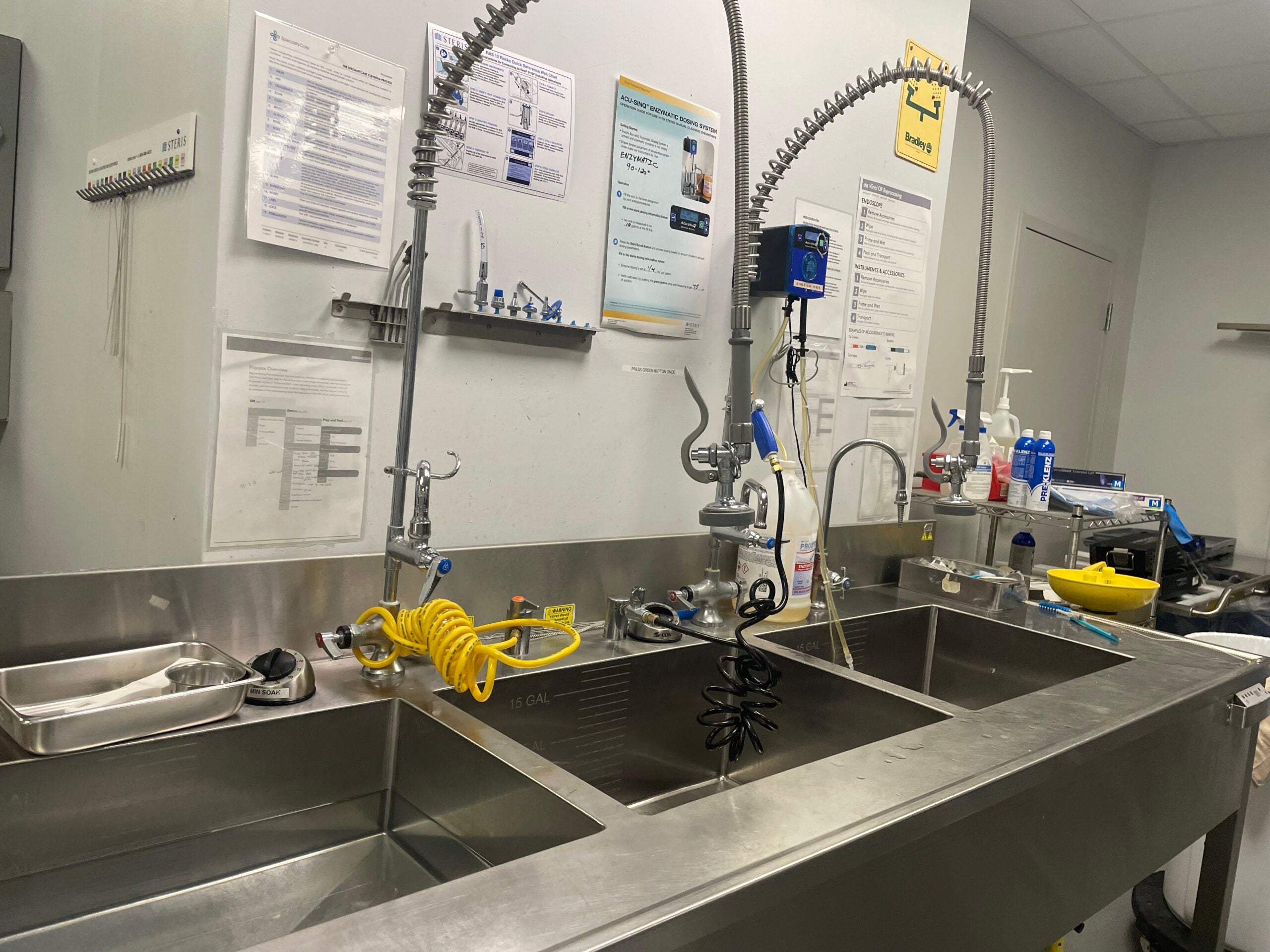
Asking who, what, why, when, where, and how—otherwise known as the “5 Ws and an H”— is a time-tested way for writers and researchers to ensure comprehensive coverage of any topic. Here, we apply this framework from the perspective of sterile processing department (SPD) professionals seeking to start a water…
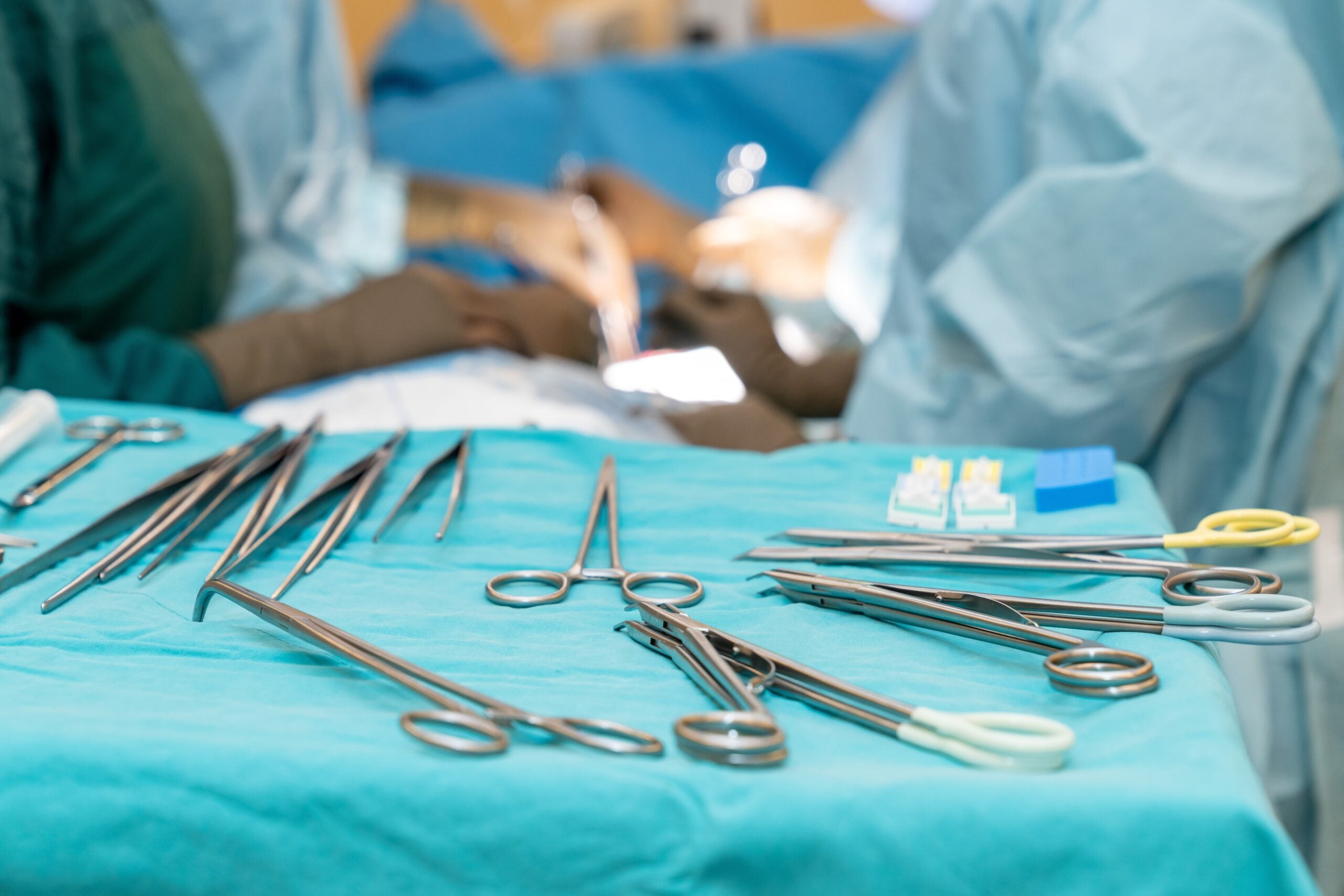
Reforming instrument reprocessing practices does not always end with the main sterile processing department (SPD). Holding clinics to the same standard adds to the challenge, whether they are associated with hospitals or operate independently. Nonetheless, standardization is just as essential to maintaining efficiency and quality standards. Establishing and maintaining best…

Over 20 years ago, an article from Johns Hopkins published in The New England Journal of Medicine showed that Staphylococcus aureus decolonization of the nares can decrease risk of surgical site infections (SSI). Since then, nasal decolonization—the application of a topical antimicrobial or antiseptic agent to the nares—has been adopted…

Ambulatory surgery centers (ASCs) play an increasingly crucial role in delivering outpatient surgical care that is efficient, effective, and—most importantly—safe. As the ASC sector continues to grow and evolve, maintaining best practices in hand hygiene and environmental cleaning and disinfection is imperative to protect patients from infections. ASCs also should…
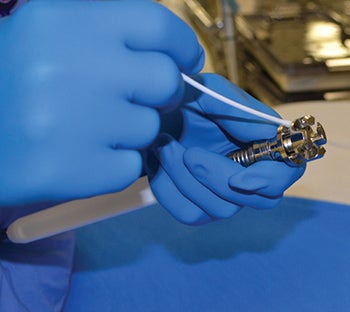
Inspecting surgical devices is a time-consuming process. However, diligently checking every instrument prior to sterilization is essential to ensuring safe, proper functioning. As the last people to see devices before they are used for patient care, sterile processing technicians must be thorough. Exterior surfaces should be inspected for flaws such…
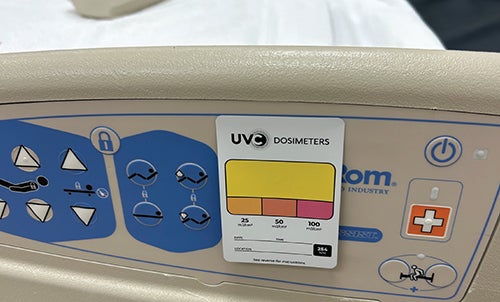
Approximately one in 31 hospital patients has at least one infection on any given day, according to the Centers for Disease Control and Prevention (CDC). In surgical settings, the risk is even higher, with up to 7% of patients developing an infection during surgery. These infections can lead to a…

For surgeons and other medical professionals, what to wear to work is more than just an afterthought. Over the decades, surgical scrubs have undergone a significant transformation, evolving from simple, functional garments to sophisticated attire that prioritizes both comfort and infection control. They are not merely clothing but a vital…
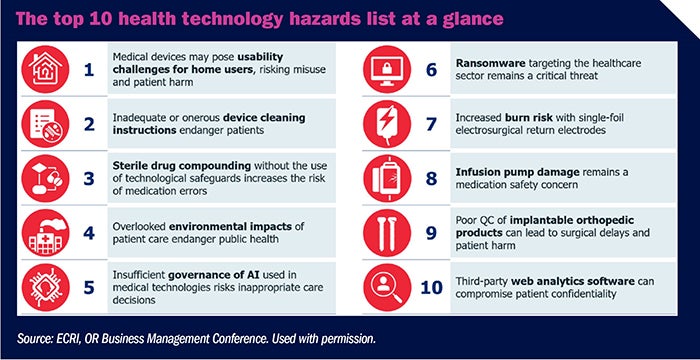
What is the purpose of the top 10 health technology hazards list, released every year by ECRI? “Our number one goal at ECRI is to reduce preventable harm,” stresses Jason Launders, MSC, former director of operations, device evaluation, at ECRI. “We know that every healthcare provider has a lot they…
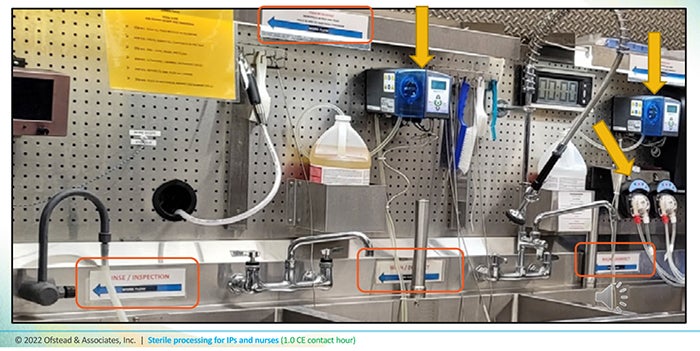
Sterile Processing Department (SPD) managers and technicians know a thing or two about pressure. In a recent webinar covering sterile processing basics, Cori L. Ofstead, MSPH, president and CEO of Ofstead & Associates, Inc, and Abby Smart, MPH, research associate, cited the example of a 480-bed hospital that performed 13,650…
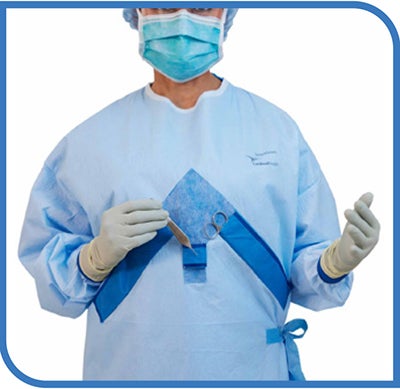
There is movement happening in the world of surgical gowns. It is driven in part by the COVID-19 pandemic, which brought new focus to the need for adequate stockpiles of personal protective equipment (PPE)—and for PPE that works as intended. Staff need to know their gowns incorporate the latest technology…